
We have various lands for sale or leasing for the development and construction of photovoltaic parks.
Investments in Romania
We do not accept collaborations, only direct Investors!
Are you planning to invest in a solar energy project? Look no further! We specialize in identifying and purchasing land for photovoltaic parks. We guarantee the optimal surface for solar panels.
Investors, as members of our community, you will have access to our skills in areas like classical agriculture. You will also gain from knowledge in organic agriculture and renewable energy. We offer you viable businesses to buy.
Join our community today and enjoy the advantages we offer!
Together we can make a difference and build a better future for all.
Land rental for Photovoltaic Park in Romania – Requirements
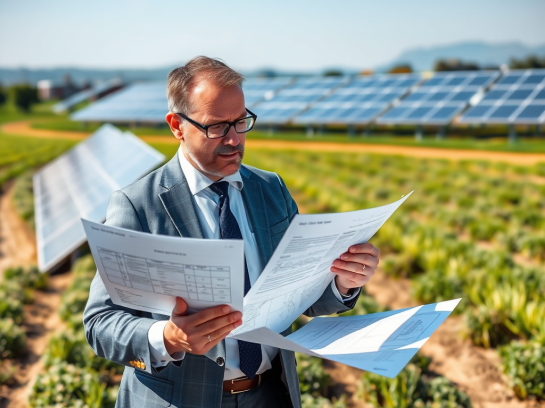
As a consultant specializing in the agricultural and energy fields, I understand that proper land identification and security are essential. They represent the fundamental pillar of any successful photovoltaic project. This aspect is particularly important in the context of recent legislative reforms in Romania.
Your intention to invest in the development of photovoltaic parks is clear. So, I offer to you a detailed analysis of the land choice criteria. I will also detail the essential legal implications. These are necessary to guarantee bankability and accelerate the authorization process.
Photovoltaic Energy in Romania | Renewable Energy in Romania | AgriEnergy in Romania | Lands for Solar Energy Projects in Romania | Lands for Development Solar Energy Projects in Romania | Energy in Romania | Solar Energy Projects in Romania |
Land Acquisition Strategy: Due Diligence and Criteria of Excellence (Solar PV)
For information about land offers, I am now waiting for an email from you!
To guarantee the success of a large-scale photovoltaic project, the due diligence process is essential. More than a simple verification of the title deed is required. An in-depth analysis is necessary. This must focus on three critical aspects. First, technical feasibility, including solar exposure and connection. Second, compliance with urban planning regulations relating to urban development and agricultural land use. Finally, long-term legal security of land rights.
1. Technical and Geographical Selection Criteria
Identifying the optimal surface area is dictated by natural factors and infrastructure, which directly influence Annual Energy Production (AEP) and CapEx costs:
Solar Radiation – Land Leasing for Photovoltaic Parks in Romania
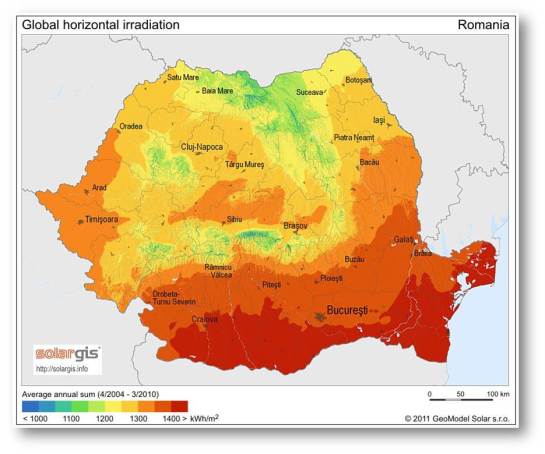
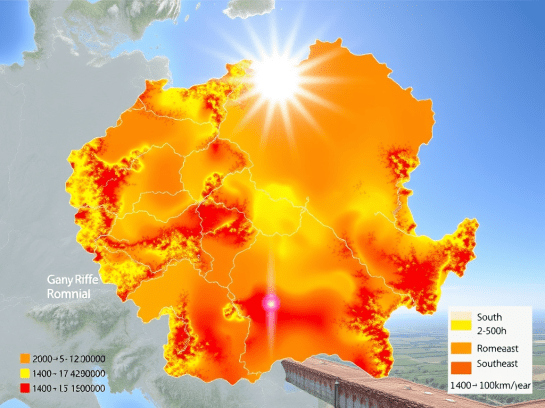
The priority is areas with high solar radiation. In Romania, the most favorable regions, like the South, Southeast, and Dobrogea, record values between 1,400 and 1,600 kWh/m²/year.
Topography and Orientation – Land Leasing for Photovoltaic Parks in Romania
The ideal site should be relatively flat or have a slight south-facing slope. This orientation allows the panels to be installed at an optimal angle (typically 20-30° in Romania) to maximize efficiency. It is also vital that the site be free of natural obstacles (trees, hills) that create shade.
Proximity to the Electricity Grid (Connection) – Land Leasing for Photovoltaic Parks in Romania
This is probably the most important cost factor. The selected site must be located near a high-voltage power line. Connection costs can become prohibitively high if the location is isolated, severely affecting the project’s financial model. The first technical documentation (Solution Study) will be directly influenced by this proximity.
Exclusion of Protected Areas – Land Leasing for Photovoltaic Parks in Romania
The site must not be located within Natura 2000 protected areas. These areas are crucial for conserving biodiversity. They protect various species and habitats across Europe. These locations are strictly restricted for the development of large-scale photovoltaic parks. This is due to their ecological significance. It is also necessary to preserve fragile ecosystems. Establishing such parks in or near these protected areas harm wildlife. It would also disrupt the delicate balance of these environments. This undermines years of conservation efforts aimed at maintaining natural habitats. Hence, other sites must be found that follow these environmental regulations. This ensures sustainable development while safeguarding our planet’s biodiversity.
Photovoltaic Energy in Romania | Renewable Energy in Romania | AgriEnergy in Romania | Lands for Solar Energy Projects in Romania | Lands for Development Solar Energy Projects in Romania | Energy in Romania | Solar Energy Projects in Romania |
2. Securing Land Rights: Ownership vs. Leasehold
For a long-term renewable energy project (35 years or more), the legal structure of the land title is crucial. The structure is essential for the future. The land rights must be clearly established. This plays a vital role. It is important to clearly clarify the land rights. This is important for the bankability of the project (the ability to obtain external financing).
The preferred legal instrument is the Superficies Right (Superficies Right)
The superficiesis a main real right. It gives the developer (the Superficies Owner) the right to build. It also allows him to run constructions (panels, stations, foundations) on someone else’s land (the Owner). As a real right, it is more stable. It provides the necessary guarantee to creditors for the duration of the contract (for example, 35 years). Expenses related to superficies contracts can, in principle, be capitalized and amortized over the duration of the contract.
Essential Clauses
The Superficies Contract must include solid clauses that allow the project to work in the long term:
a. The possibility of assigning the contract to financiers or future buyers of the project.
b. The right to carry out joining and dismantling operations, along with the authority to construct necessary infrastructure, is granted without the need for repeated prior consent from the owner. This provision ensures that all parties involved can efficiently manage and develop the property, fostering a collaborative environment where improvements and modifications can occur seamlessly. Such an arrangement not only facilitates prompt project completion but also enhances the overall value and utility of the space, allowing for adaptations that align with future needs and innovations.
c. Including a right of preemption in favor of the investor, if the owner decides to sell the land, ensures that the investor has the opportunity to buy the property before it is offered to any other potential buyers. This provision not only protects the investor’s stake in the investment but also allows them to keep control over the land’s future use and development. By securing this right, the investor can strategically plan their investment and respond promptly to any market changes, ensuring they do not miss the chance to acquire a valuable asset that enhance the overall value of their portfolio. Furthermore, such a clause can foster a stronger relationship between the owner and the investor, as it establishes clear expectations and supports the idea of beneficial cooperation in real estate ventures.
Photovoltaic Energy in Romania | Renewable Energy in Romania | AgriEnergy in Romania | Lands for Solar Energy Projects in Romania | Lands for Development Solar Energy Projects in Romania | Energy in Romania | Solar Energy Projects in Romania |
3. Regulatory Simplification and Agricultural Circuit (Law 21/2023)
Recent legislation has significantly simplified the authorization process, removing major bottlenecks in the development phase:
A. Elimination of the Zonal Urban Plan (PUZ)
In the past, any change in the functionality of the land outside the built-up area involved a specific process. This required both the development and approval of a PUZ. This process could take up to 9 months. According to Law no. 21/2023:
It is no longer necessary to develop a PUZ for renewable energy generation capacities. These include wind, photovoltaic, storage units and transformer stations.
This exemption applies to objectives located on agricultural land located outside the built-up area. The condition is that they are of class III, IV and V quality.
For these simplified projects, the only authorization requirements are, in principle, obtaining a decision to remove the land from the agricultural circuit. It is also necessary to issue a Building Authorization.
B. Agricultural Circuit Removal Procedure (SCA)
The permanent or temporary removal of land from agricultural use is necessary for the placement of photovoltaic panels.
SCA approval: The Director of the County Agriculture Department grants approval for removal from agricultural use. This is possible with the approval of the Ministry of Agriculture and Rural Development. This applies to land plots larger than 1 ha.
Tacit Acceptance: A crucial aspect of simplification is the clarity of the 45-day deadline. If the director’s decision or opinion is not issued within this time frame, administrative measures are introduced. In this case, the withdrawal from the agricultural circuit is considered to be tacitly accepted. This introduces an administrative discipline mechanism that significantly reduces the risk of blockage.
Tariffs: Although the lands are removed from the agricultural circuit, a tariff is applied due to the Land Improvement Fund, the value of which is adjusted annually based on the inflation coefficient (for example, the tariffs for 2025 were established by MADR Order no. 13/2025).
Photovoltaic Energy in Romania | Renewable Energy in Romania | AgriEnergy in Romania | Lands for Solar Energy Projects in Romania | Lands for Development Solar Energy Projects in Romania | Energy in Romania | Solar Energy Projects in Romania |
C. Use of Superior Quality Agricultural Land (Class I and II)
The law favors class III-V lands, primarily due to their suitability for various agricultural activities and their lesser ecological sensitivity. Yet, there is the possibility of using class I and II agricultural lands, which are typically more fertile and highly productive. These must be used in a dual regime (Agri-PV), combining agricultural practices with photovoltaic solar energy production. This innovative approach not only optimizes land use but also enhances sustainability by allowing crops to grow while concurrently harnessing solar energy, thus benefiting both farmers and the environment in the long term.
AgriEnergy
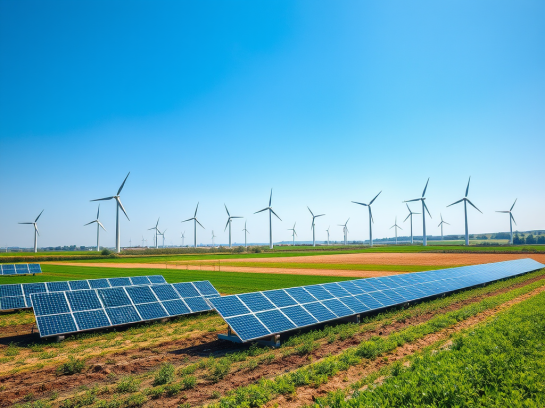
AgriEnergy – Developing a business in a dual system: Agriculture and Renewable Energy.
In today’s rapidly evolving world, the importance of sustainability and finding innovative solutions to meet our energy needs can’t be overstated. Agriculture and renewable energy are two key sectors that play a crucial role in addressing these challenges.
The concept of AgriEnergy involves integrating agriculture and renewable energy production within the same system. This dual approach offers many benefits, ranging from enhanced productivity and resource utilization to reduced environmental impact. By combining agricultural operations with renewable energy technologies, farmers and landowners have the opportunity to diversify their income streams while contributing to a cleaner and more sustainable future.
On the agriculture front, the integration of AgriEnergy allows for the efficient use of land, water, and nutrients. For example, solar panels can be installed above crop fields, utilizing unoccupied airspace and maximizing land use efficiency. The shade provided by the panels can also help protect delicate crops from excessive sunlight, creating a favorable microclimate for growth.
Furthermore, AgriEnergy systems can use innovative techniques like vertical farming or hydroponics. These ways allow year-round cultivation and higher crop yields, while also minimizing water consumption and the need for chemical pesticides. The surplus energy generated from renewable sources like solar or wind can be utilized to power advanced irrigation systems or support farm machinery, further optimizing resource allocation.
In terms of renewable energy production, AgriEnergy systems offer significant advantages. Farmers can generate electricity from solar panels, wind turbines, or biomass, reducing their dependence on traditional energy sources and even becoming energy exporters. By leveraging the existing infrastructure and agricultural skill, it becomes easier to implement these renewable energy technologies in rural areas.
AgriEnergy not only provides economic benefits to farmers and landowners but also contributes to the overall energy transition. As the global demand for clean energy continues to rise, these integrated systems can play a vital role in meeting renewable energy targets and reducing greenhouse gas emissions. Additionally, the diverse sources of income generated through AgriEnergy help to strengthen rural communities and enhance their resilience.
To successfully develop a business in the dual system of agriculture and renewable energy, thorough planning, and knowledge are key. It is important to understand the specific requirements and regulations related to both sectors, as well as to conduct feasibility studies to assess the economic viability of the project. Collaboration with experts in the field, like agricultural consultants and renewable energy specialists, can also greatly ease the process.
In conclusion, AgriEnergy presents an exciting opportunity where agriculture and renewable energy converge. This integrated approach offers sustainable solutions to tackle energy needs while optimizing resource utilization and promoting environmentally friendly practices. By embracing AgriEnergy, businesses can not only contribute to a greener future but also harness the potential for economic growth and prosperity in the agricultural sector.
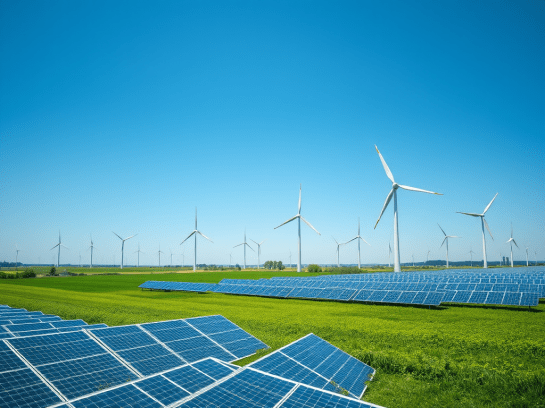
In an area favorable to the development of renewable energy, such as South-East Romania, the AgriEnergy Concept proposes an innovative business that combines traditional agriculture with green energy production. Photovoltaic parks and wind farms represent the key elements of this business.
In the South-Eastern location of Romania, the agricultural business benefits from a privileged land for the development of renewable energy, thus promoting sustainability and energy autonomy. The integration of a photovoltaic park and a wind farm signifies an opportunity for farmers to obtain extra income and to contribute to environmental protection.
AgriEnergy benefits
Increased profitability: The integration of renewable energy in the agricultural activity allows obtaining constant extra income, from the sale of the electricity produced.
Sustainability: The use of renewable energy reduces dependence on traditional energy sources and contributes to protecting the environment.
Energy autonomy: Own production of green energy offers the agricultural business autonomy and security in terms of energy needs.
Promoting sustainability: Integrating renewable energy into the agricultural business shows commitment to the environment. It can attract a segment of customers concerned about sustainability.
Implementation of AgriEnergy
1. Photovoltaic parks: The installation of photovoltaic solar panels on agricultural land allows the conversion of solar energy into renewable electricity.
2. Wind farms: Placing wind turbines on agricultural land allows the capture of wind energy and its transformation into clean electricity.
This energy can be used in your own agricultural activities or sold in the distribution network.
Observations
In recent years, the development of the energy sector in Romania has been in the spotlight. There has been an increasing emphasis on renewable energy. One of the main renewable energy sources that has gained ground in Romania is photovoltaic energy.
The development perspective of solar photovoltaic energy in Romania is promising. Romania benefits from a favorable geographical positioning. There is a high level of solar radiation. The vast potential of the available land is impressive. All this offers a significant opportunity to invest in and develop photovoltaic projects in Romania.
Romania has set its own ambitious renewable energy goals. This is driven by the European goals of reducing greenhouse gas emissions. The transition to clean energy is also a priority. The development of photovoltaic energy plays an important role in achieving these goals.
By promoting the use of solar energy, the aim is twofold. One goal is to increase production capacity. Another goal is to diversify the country’s energy mix. Investments in large photovoltaic plants and distributed solar energy projects in communities contribute to increasing Romania’s sustainability and energy independence.
Besides the economic and environmental advantages, the development of photovoltaic energy also brings social benefits. Solar projects can create jobs. They can also stimulate local economic development in the regions where they are implemented. Solar energy can offer access to electricity in rural or isolated areas. This contributes to reducing the development gap.
Please note that these details are open to discussion. They also involve extra modifications. The aim is to meet the specific needs of the collaboration with Investors.
In conclusion, the land acquisition market for photovoltaic parks is now favored by legislative simplifications. Still, success depends on the execution of rigorous due diligence. This process must highlight grid connection factors and securing the Superficie right. At the same time, it is important to take advantage of this elimination. This elimination refers to the PUZ need for projects up to 50 MW on lower quality land.
Photovoltaic Energy in Romania | Renewable Energy in Romania | AgriEnergy in Romania | Lands for Solar Energy Projects in Romania | Lands for Development Solar Energy Projects in Romania | Energy in Romania | Solar Energy Projects in Romania |
Updating/Completing Information
Informative Note. This concerns the entry into force of the Plan for the allocation of electricity network capacity. It is for the connection of electricity production sites. This aspect is provided for in Annex No. 1 of ANRE Order 53/2024 starting with 01.01.2026.
According to the provisions of Annex 1 to ORDER ANRE 53/2024 which approved the “Methodology about the allocation of electricity network capacity for the connection of electricity production sites”, respectively of the amendments and supplements to ORDER 59/2013 introduced by the same ORDER ANRE 53/2024, starting with 01.01.2026, for production/consumption and production sites with installed power of production capacities greater than or equal to 5 MW, the issuance of the technical connection authorization is conditional on the fulfillment of all obligations regarding the payment of the allocated capacity according to the provisions of the capacity allocation contract.
Under these regulated conditions, Retele Electrice Romania will issue technical connection permits for these categories of users only until 31.12.2025, after which the capacity allocation methodology will be applied.
Regarding the above:
- Connection requests for which the contract for the development of the solution study has not been concluded by 31.12.2025, will be cancelled ex officio, with users having to initiate a new request in 2026 under the conditions of ORDER ANRE 53/2024;
2. Connection requests for which the contract for the development of the solution study was concluded by 31.12.2025, but which will not be finalized by issuing the technical connection approvals by 31.12.2025, will be managed as follows:
Users will communicate in writing to Retele Electrice Romania by 09.01.2026 one of the two options:
- Closing the connection inquiry, with payment to the designer for the services provided by 31.12.2025, according to the designer’s assessment for situations with direct entrustment, respectively based on the components in the distribution operator’s offer for requests entrusted to the OD;
2. Continuation of the process of approving the solution study and closing the connection request after the issuance of the CTE approval by the distribution operator (without being conditioned by the issuance of the TSO approval – where applicable), without issuing an ATR, in which case the full value of the solution study will be paid to the designer.
In the event that one of the two options is not transmitted by 09.01.2026, Retele Electrice Romania will apply those mentioned in point a).
For any of the situations, the user understands that, after 31.12.2025, the connection process will be resumed under the conditions stipulated by Ord. 53/2024 and Ord. 59/2013 with later amendments and completions, without being capable of suing the network operator for any damages/penalties.
Photovoltaic Energy in Romania | Renewable Energy in Romania | AgriEnergy in Romania | Lands for Solar Energy Projects in Romania | Lands for Development Solar Energy Projects in Romania | Energy in Romania |
Ion Tudor – Investments Consultant
Mobile: +40 734.845.159
contact@investmentsinromania.eu
Photovoltaic Energy in Romania | Renewable Energy in Romania | AgriEnergy in Romania | Lands for Solar Energy Projects in Romania | Lands for Development Solar Energy Projects in Romania | Energy in Romania |
- Investments in Romania
- Land rental for Photovoltaic Park in Romania – Requirements
- Land Acquisition Strategy: Due Diligence and Criteria of Excellence (Solar PV)
- 1. Technical and Geographical Selection Criteria
- Solar Radiation – Land Leasing for Photovoltaic Parks in Romania
- 2. Securing Land Rights: Ownership vs. Leasehold
- 3. Regulatory Simplification and Agricultural Circuit (Law 21/2023)
- AgriEnergy
